
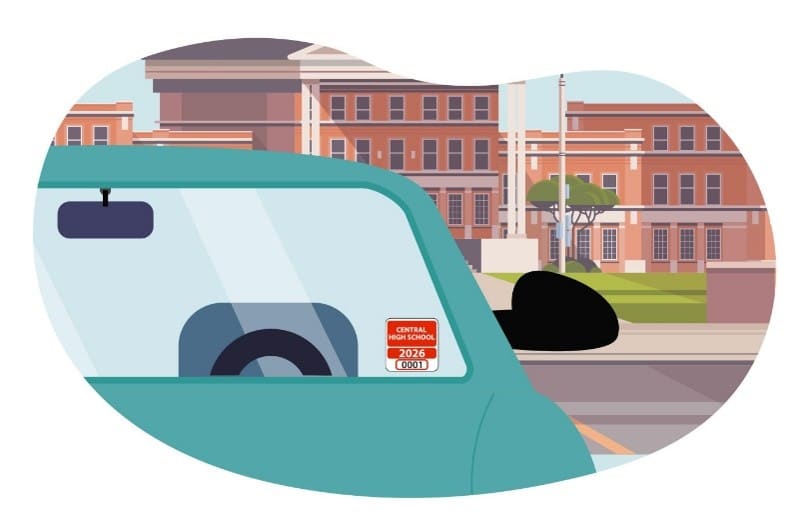
If you manage an HOA, apartment complex, corporate lot, or campus parking program, one of the most overlooked decisions is also one of the most consequential: what kind of parking sticker should you actually order? Two choices matter more than people expect: the adhesive type (permanent vs. repositionable) and the background style (white vs. clear). Get these wrong, and you’ll deal with fraud, faded numbers, sticky residue, or unhappy residents. Get them right, and your parking program runs quietly in the background the way it should.
This guide breaks down the tradeoffs so you can pick the combination that fits your property.
Parking Sticker: Permanent Adhesive
Permanent decals use a strong, aggressive adhesive designed to bond tightly to glass and stay there and not to be easily removed. Some can be made to tear or shred into pieces if someone tries to peel them off.
Pros:
- Tamper-resistant. Trying to remove one is difficult and usually destroys it, which discourages permit sharing or reselling.
- Durable in harsh conditions. Holds up well through sunlight, heat and cold.
- Signals enforcement seriousness. A permanent parking sticker tells residents and visitors that the parking program is actively managed and monitored
Cons:
- Messy removal. When a resident moves out, sells their car, or a permit expires, getting the old sticker off often means scraping, razor blades, or adhesive remover.
- Not reusable. A new vehicle means a brand-new sticker. You can’t transfer the old sticker.
- Risk of damage. Aggressive removal can scratch tint or leave a hazy residue on the glass.
- Poor choice for short-term programs. Not suited for seasonal or temporary situations.

Parking Sticker: Repositionable
These use a low-tack adhesive that allows the parking sticker to be peeled off cleanly and reapplied.
Pros:
- Clean removal. No scraping or residue, making it ideal for renters, leased vehicles, or programs with regular turnover.
- Flexible placement. Can easily be moved between vehicles or windows.
- Great for short-term use. Well suited to semester parking, construction sites, seasonal permits, or visitor passes.
- Better resident experience. Easier for people to remove when they move out or get a new vehicle, without needing tools or solvents.
Cons:
- Weaker fraud protection. Because they come off cleanly, they’re also easier to peel and hand off to another vehicle or person.
- Less durable. More prone to lifting or peeling in extreme temperatures or when repositioned frequently.
- May need replacing. May need to be replaced over time as they wear.
Choosing Based on Use Case
| Permanent | Repositionable |
|---|---|
| Long-term reserved or owner-occupied spots | Apartment/rental communities with turnover |
| Gated communities, paid lots, high fraud risk | Seasonal, semester, or temporary staff parking |
White Background vs. Clear/Transparent Background
The second decision that is often overlooked is what’s behind the permit number itself.
White Background
Pros:
- High contrast. Numbers and barcodes are easy to read at-a -glance, which helps security patrols and scanning equipment.
- Hides what’s behind the glass. Window tint variation, dirt, or interior clutter won’t interfere with legibility.
- Visible from a distance. Easier for parking enforcement to spot-check without getting close to the vehicle.
- Better print quality. Logos, colors, and zone-coding show up more clearly on a white base.
Cons:
- More visually obtrusive. Shows more prominently on the windshield or window, which may bother the car owner.
- Heavier look. Some residents find it less sleek, especially on tinted windows.
- Aesthetic mismatch. Can clash with darker tint or a car’s overall look.
Clear/Transparent Background
Pros:
- Nearly invisible. Preserves the vehicle’s appearance and doesn’t disrupt window tint.
- Preferred aesthetically. Popular with residents and employees who don’t want a visible “parking sticker” look.
- Still legible up close. Works best for checking permits at close range.
Cons:
- Harder to read from a distance. Numbers can blend into whatever is behind the glass, especially in low light.
- Scanning errors. Lower contrast can trip up barcode or QR readers.
- Visibility depends on conditions. Tint, dirt, or interior items behind the glass can obscure the permit.
Combining Both Options
Here’s a quick way to think about the four combinations:
- Permanent + White: Maximum security and visibility. Best for high-security lots or gated properties.
- Permanent + Clear: Secure but subtle. Good middle ground when you want tamper resistance without a bulky look.
- Repositionable + White: Flexible and easy to spot. Works well for parking programs with turnover that still need quick visual checks.
- Repositionable + Clear: Maximum flexibility and the most subtle look. Best for short-term, low-risk parking programs.
Practical Tips for Property Managers and HOAs
- Order small samples of both adhesive types and background styles before committing to a bulk order.
- Test stickers on actual vehicles in your local climate; heat and cold affect adhesives differently.
- Factor in resident or employee turnover rate. High turnover may favor repositionable stickers.
Quick decision checklist:
- High fraud risk or long-term residents? Permanent
- Frequent turnover or short-term use? Repositionable
- Need fast visual/scanner checks? White background
- Want a subtle, low-profile look? Clear background
Match the combination to your property’s specific needs to ensure your parking program will run smoothly.
Conclusion
There’s no single “best” parking sticker. The right choice depends on your property’s security needs, turnover rate, climate, and how much you care about aesthetics. A gated community with owner-occupied units might lean permanent and white for maximum control and visibility. A university or apartment complex with constant turnover might do better with repositionable and clear for a cleaner resident experience.
To speak to a consultant about your options and get a free sample of a parking sticker, contact THRESHOLD at 800-243-1969.



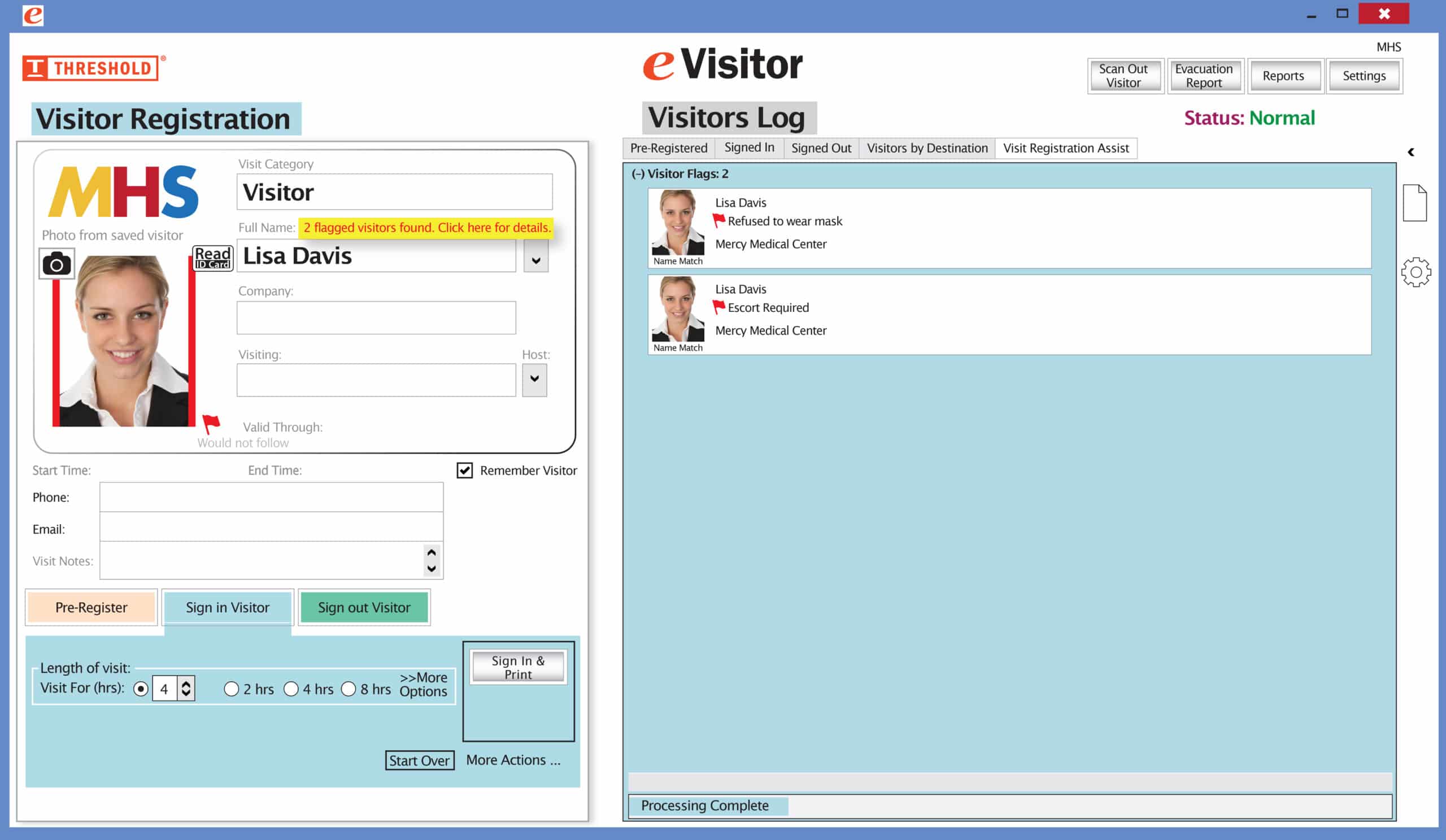 It’s easy and free to activate this feature. Simply call us and ask for “Red Flag, No Badge” to be turned on. Once it’s on, the above pop-up will come up when a red flagged visitor comes back. No badge will print and the attendant will need to follow the facility’s policy for handling red flagged visitors.