
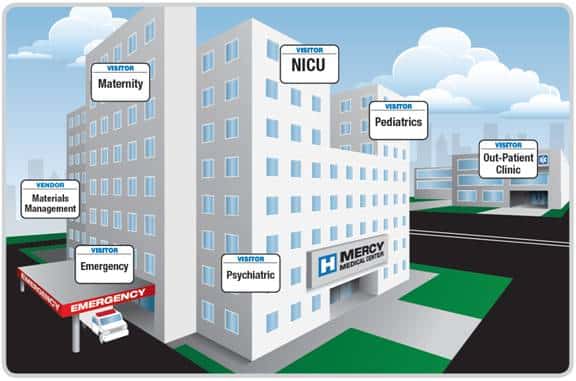
Hospital security directors face no shortage of responsibilities, but few are more critical than knowing who is in the building at any given moment. Investing in a visitor management system for hospitals has never been more important. Managing visitors is a key aspect of hospital security, presenting several considerations for patient and building safety, staff workflow, regulatory compliance, and patient privacy.[1] A modern system isn’t just a convenience — it’s a cornerstone of facility security and a fundamental part of keeping patients, staff, and visitors safe every single day.
Know Who’s in Your Facility at All Times
In the event of an emergency or security incident, every second counts. Whether it’s a facility lockdown, a patient safety concern, or an unexpected situation, hospital staff need to know immediately who is on the premises and where they are. A hospital visitor management system creates a real-time record of every person who has entered the building, giving administrators and security personnel the accurate information they need to act quickly and confidently.
Healthcare facilities present unique security challenges. Hospitals are open 24/7/365 and need to balance an open-door policy with safety and security.[1] Hospital emergency department visits have increased by 40 percent in the United States,[1] and staff must also control access to sensitive spaces such as neonatal units, intensive care units, and pharmaceutical storage.[3] Without a reliable system in place, accounting for everyone in the building becomes guesswork — and in a healthcare environment, guesswork isn’t good enough.
The Power of the Badge
One of the most visible and effective features of a visitor management system for hospitals is badge printing. When a visitor checks in and receives a badge, it signals to everyone in the facility that this person has been through your sign-in process. They are known, logged, and accounted for.
Many facilities still rely on visual ID methods, such as badges, in high-traffic zones, sensitive areas, or other places where physical confirmation of identity is a key security measure.[1] For nurses, staff, and security personnel, spotting someone without a badge is an immediate visual cue that something may be off. It empowers everyone in the facility to play a role in security, not just the front desk. A badge doesn’t just identify a visitor — it communicates that your facility takes patient safety and access control seriously.
Expiring Badges Take Security a Step Further
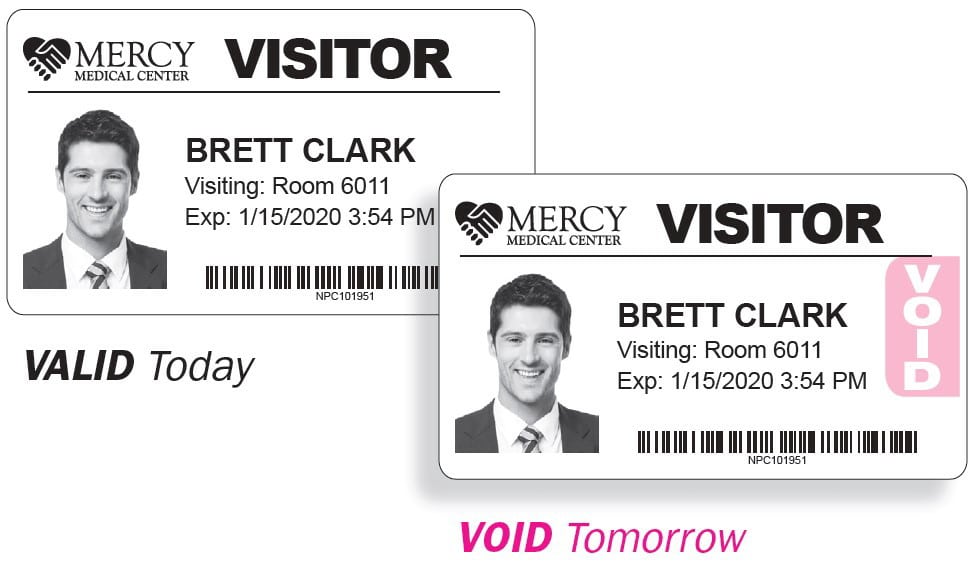
Not all badges are created equal. Standard badges confirm that a visitor checked in, but expiring badges that change color overnight go further by showing a clear visual alert when a visitor has overstayed their welcome. An expiring badge makes it easy for staff to spot someone whose visit may have run longer than intended or who is attempting to access areas they shouldn’t.[3]
Children’s hospitals, for example, are likely to have the strictest visitor management systems, with visitors being photographed before entry, or perhaps each visitor has to be cleared against a sex offender database.[1] Within larger facilities, tiers of security have more stringent measures for maternity, pediatrics, and psych departments.[3] Expiring badges support these tiered security protocols by ensuring that each visit requires a fresh check-in — preventing badge reuse and keeping your records accurate and your patients protected.
The Cost of Doing Nothing
74% of healthcare security professionals cite budget constraints as the most significant barrier to implementing new security technologies.[2]
Some facilities hesitate to invest in upgraded visitor management due to budget concerns, but the risk of inaction is real. However, the cost of inaction is likely to be far greater, as the financial and reputation damage caused by a security breach can be devastating, not to mention the potential impact on staff and patient safety.[2]
Additionally, managing visitors efficiently while maintaining a secure posture is one of the more difficult access control requirements, according to research on access control best practices.[4] A well-implemented visitor management system addresses this challenge head-on.
A Small Investment with a Big Impact
A hospital visitor management system doesn’t have to be complicated or costly to be effective. Visitor management systems have the potential to streamline most of the process, simplifying the steps so that patients can receive visitors without compromising their safety. Options range from simple sign-in books with badge printing to fully electronic solutions — and there are great choices at every level.
If your facility is still relying on a paper sign-in sheet with no badge option, now is a great time to explore what an upgrade could look like. For visitor management, 38% of healthcare facilities still rely on paper forms and badges,[3] meaning there is significant opportunity to improve security with even a modest upgrade. Your patients, staff, and community deserve the confidence that comes with knowing your doors are managed with care.
Find the Right Visitor Management System for Your Healthcare Facility
Every hospital and healthcare facility is different — different sizes, different workflows, and different levels of security already in place. That’s why we offer a full range of solutions designed to meet your facility where it is today, with room to grow. Whether you’re looking for an affordable electronic visitor management system for hospitals, expiring badges that work with your existing software, or a straightforward sign-in book that prints a badge and creates a record on the spot, we have options that are easy to implement and built with healthcare security in mind.
Reach out to us today for a conversation about how we can help make your facility a little safer.
Sources
1. Malcolm Aitken. “Hospital Visitor Management: Balancing Patient Privacy and Security.” Campus Safety Magazine, September 2024.
2. “One-Third of Healthcare Security Practitioners Are Unsatisfied with Existing Security Frameworks.” ASIS Security Management Magazine, October 2024.
3. “Spotting and Shutting Security Gaps in Healthcare Visitor Management.” ASIS Security Management Magazine, February 2026.
4. ASIS International. “The Essentials of Access Control: Insights, Benchmarks, and Best Practices.” 2023.


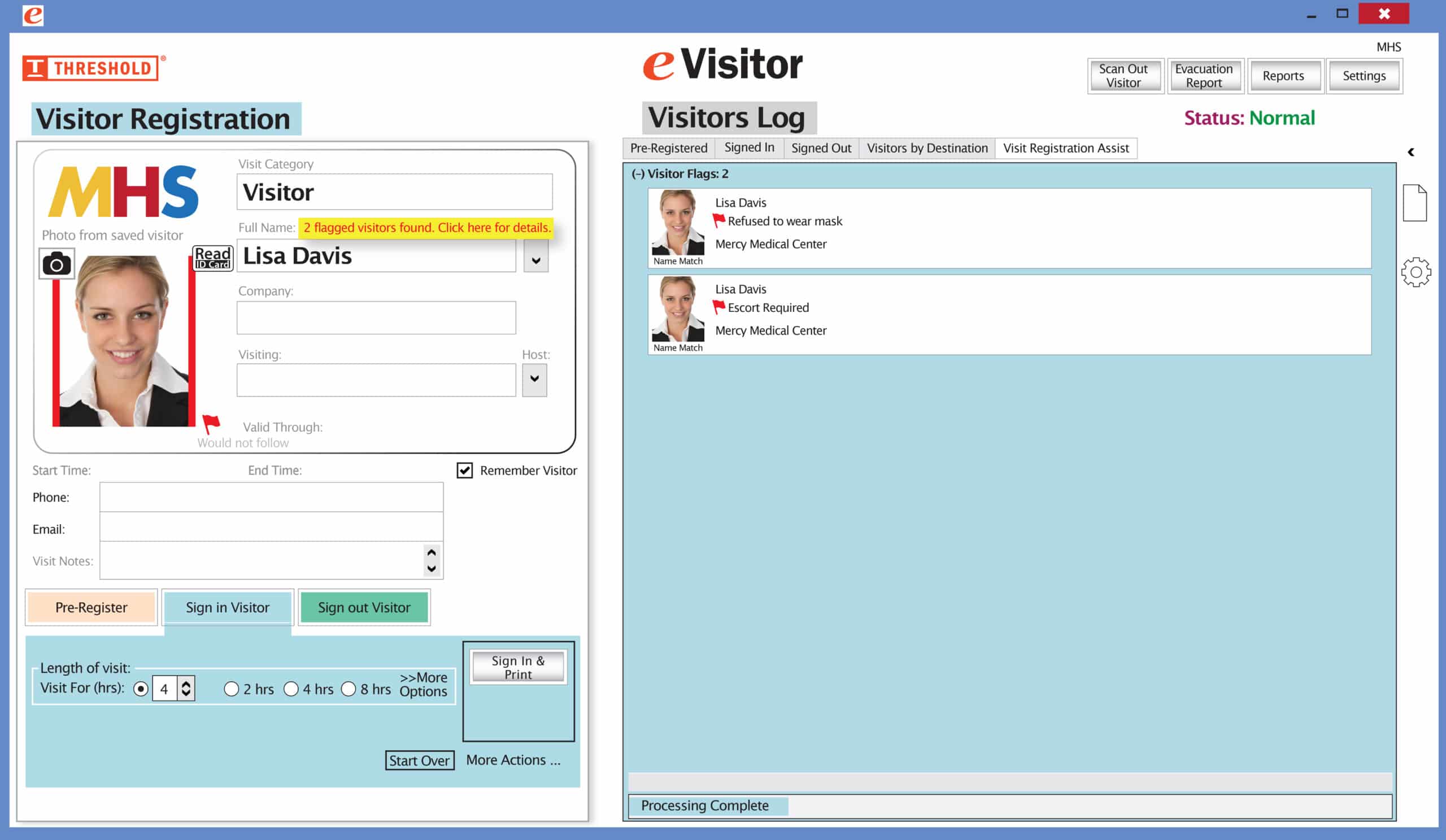 It’s easy and free to activate this feature. Simply call us and ask for “Red Flag, No Badge” to be turned on. Once it’s on, the above pop-up will come up when a red flagged visitor comes back. No badge will print and the attendant will need to follow the facility’s policy for handling red flagged visitors.